HERMES is the B2B marketplace of  BIKE — in pilot, 980+ connected retailers, 190,000+ normalised products
BIKE — in pilot, 980+ connected retailers, 190,000+ normalised products
BIKE — in pilot, 980+ connected retailers, 190,000+ normalised products
It is one of the hardest problems in the bike industry — and the one no player has managed to answer structurally so far. EurekaBike has been working on it since 2020. Six years of a specialised vertical system, built to ingest product data from wildly different sources and give it back normalised, comparable and governable.
No acronyms, no black boxes. Here is a readable account of how HERMES tackles the three problems that typically stay unsolved in our sector.
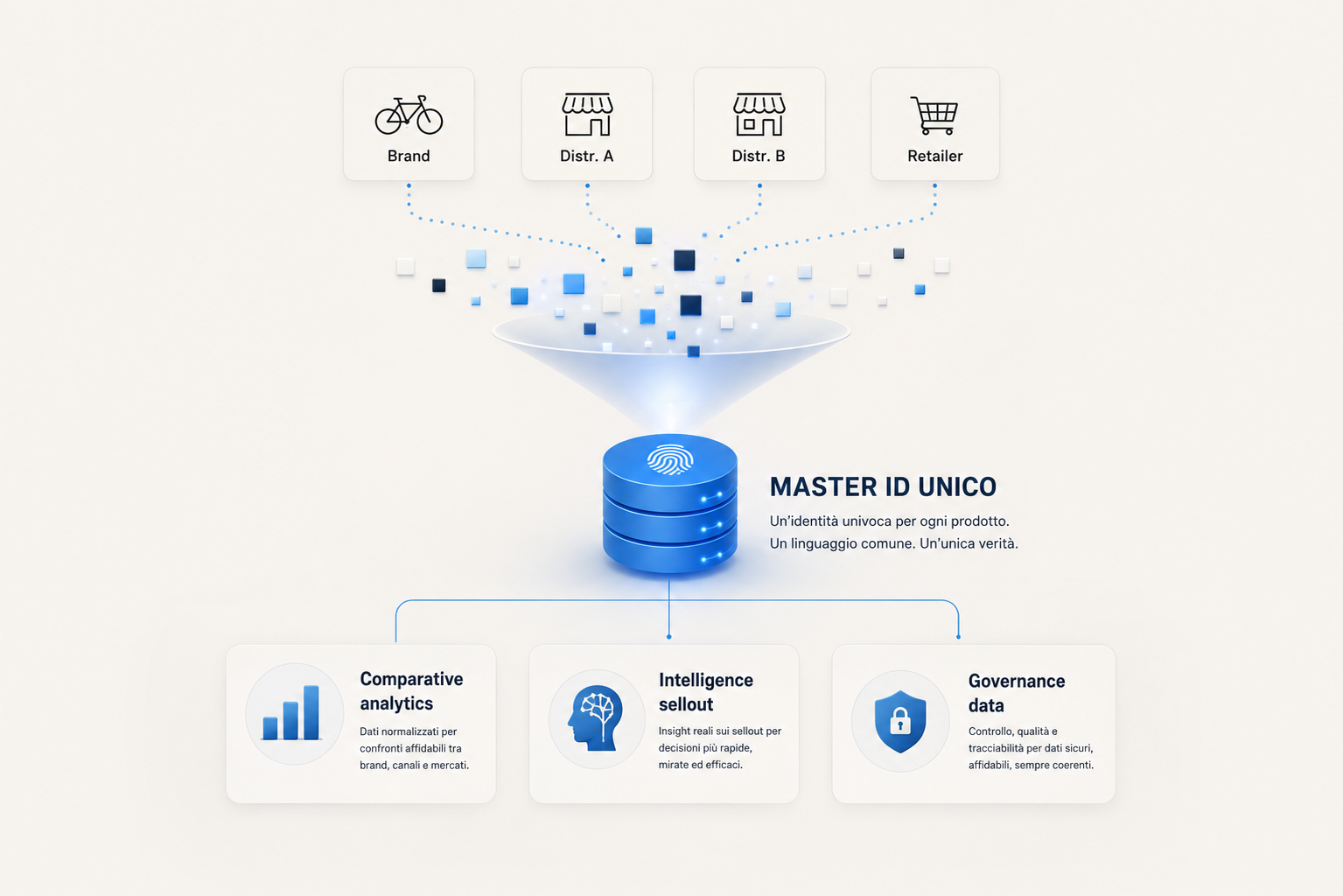
Take a concrete example. The same 700x28 road tyre from a premium brand is carried under different codes by the brand, by distributor A, by distributor B, by retailer X and by retailer Y — each with its own internal nomenclature. The system recognises that behind those five representations there is one real product.
It is the core everything else rests on: every listing, on any channel and from any distributor, is tied to a single master product ID. From there come comparative price analysis, cross-distributor sell-out intelligence, the ability to trace channel bypass, and control over the incoming data model.
It is also what puts HERMES in a position to close the data loop between production, distribution and retail — a problem no other player has managed to address structurally at industry scale.
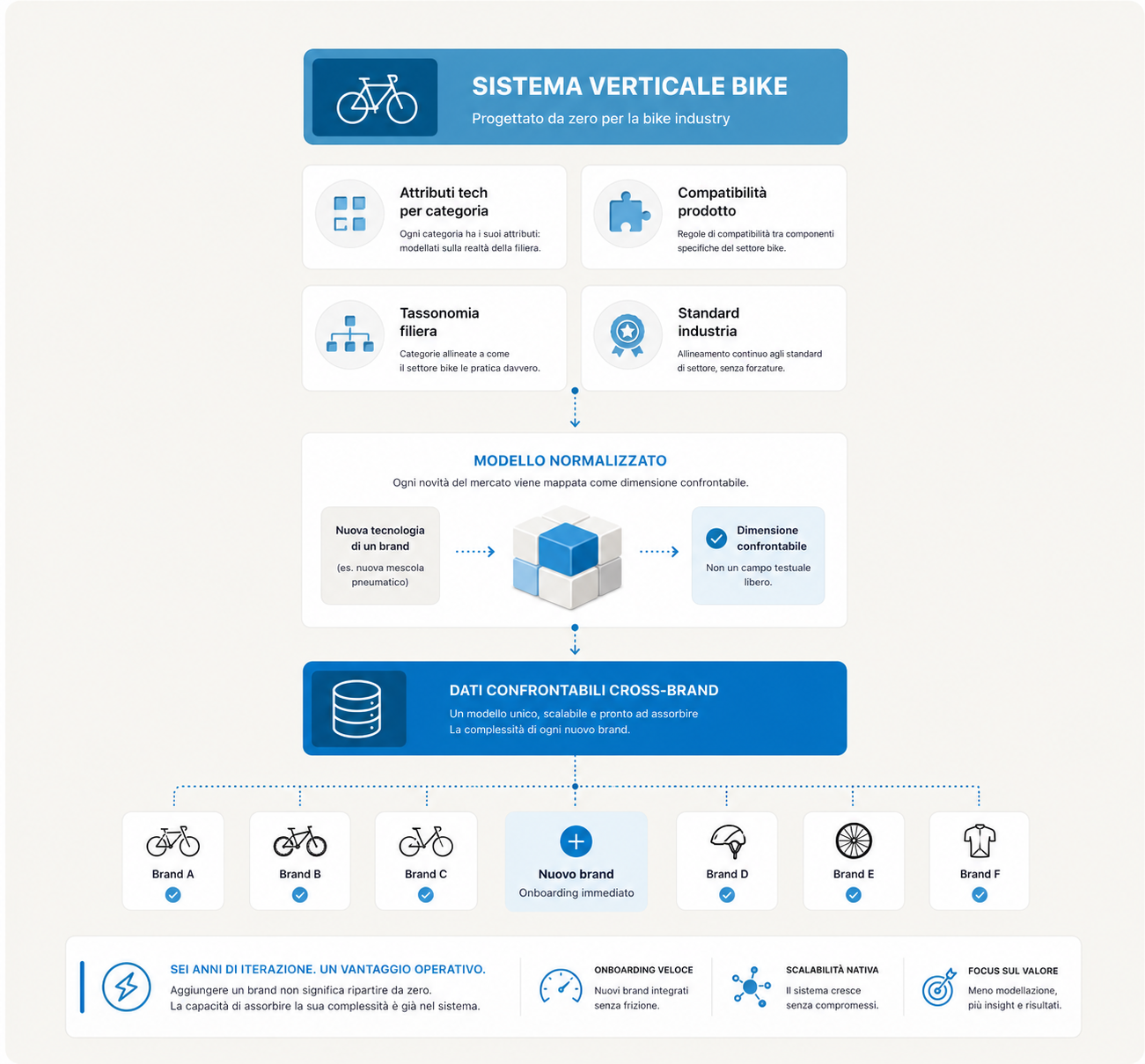
Generalist data-management platforms struggle with the complexity of a vertical supply chain like bike: attributes change considerably from one category to the next, every brand introduces proprietary technologies, compatibility between components has rules of its own, and industry standards are never entirely aligned.
The EurekaBike system was built from scratch for the bike industry. Attributes are modelled with knowledge of the supply chain, categories match how the sector actually uses them, and a new technology introduced by a brand — a new tyre compound, say — enters as a comparable dimension rather than a free-text field.
The six years of iteration behind us translate into something operational: adding a new brand does not mean taking a modelling decision from scratch — the capacity to absorb its complexity is already in the system.
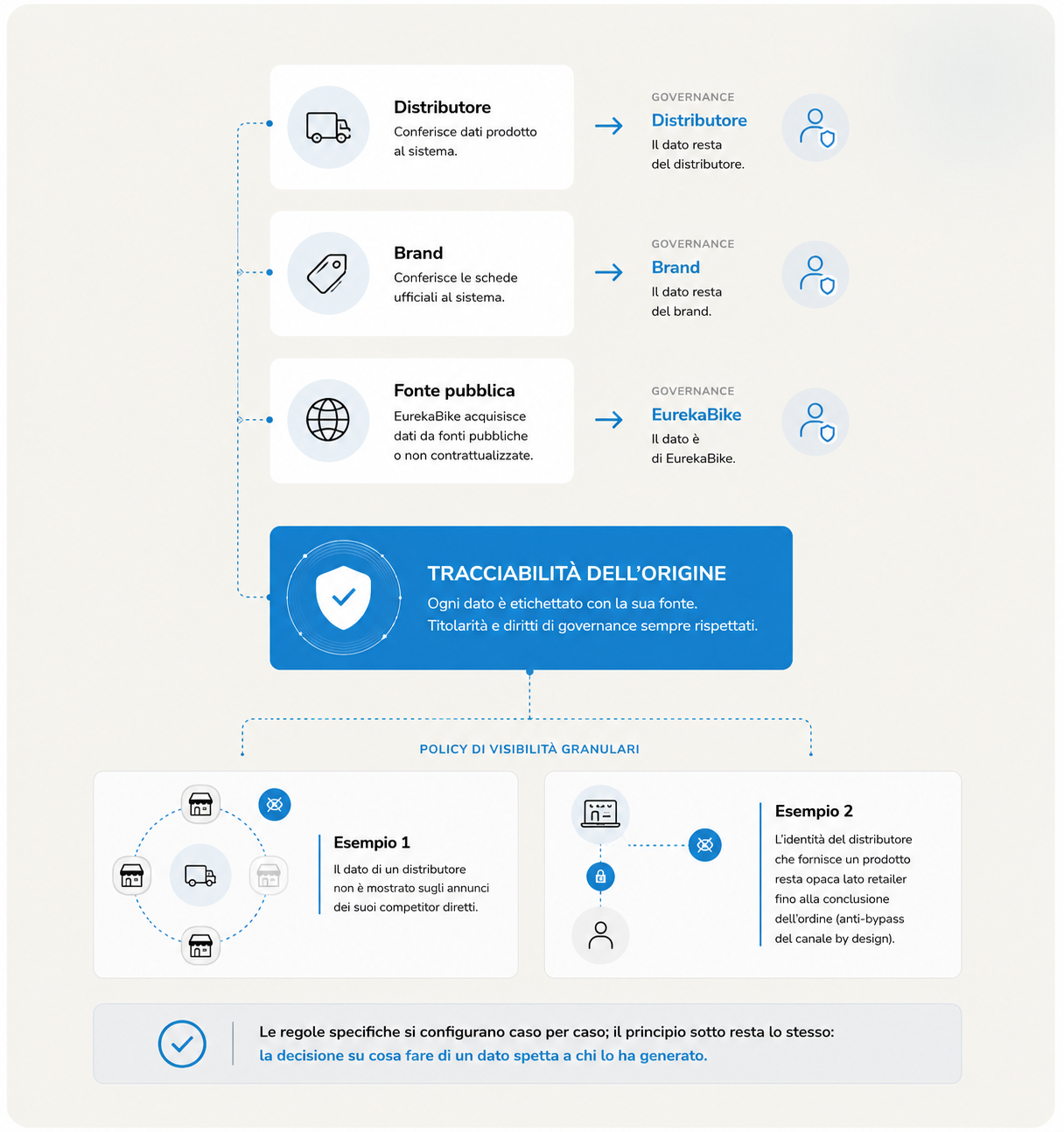
Every piece of data entering the system is labelled with its source. Whoever contributes it keeps ownership and governance rights over it — the system knows this, and behaves accordingly.
If a distributor contributes product data to HERMES, that data stays the distributor's. If a brand contributes its official records, they stay the brand's. Where EurekaBike acquires data from public or non-contracted sources, that data is EurekaBike's. The source determines who holds governance, always, before any rule of use.
This makes very granular visibility policies possible. Two examples: a distributor's data can be withheld from the listings of its direct competitors, and the identity of the distributor supplying a product can stay opaque to the retailer until the order is closed — channel anti-bypass by design. The specific rules are configured case by case; the principle underneath does not move: the decision about what happens to a piece of data belongs to whoever generated it.
Technical choices are hard to convey on a web page. For partners who want to understand normalisation at an operational level, we run a dedicated call of about an hour with a technical team — not a sales one: real screens, real cases, end-to-end processes. No slides.
We collected the questions brands, distributors and retailers have put to us across hundreds of conversations. The FAQ page is the structured answer.
Go to the FAQ →